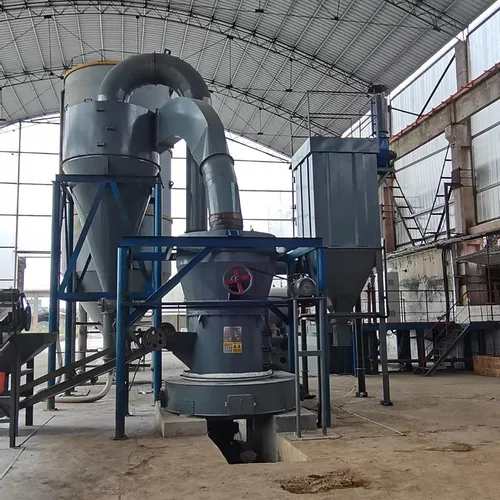
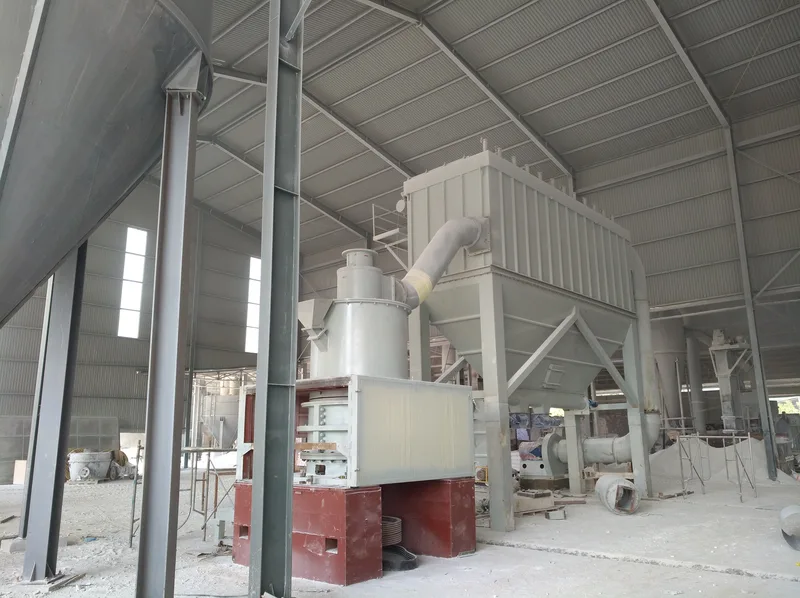
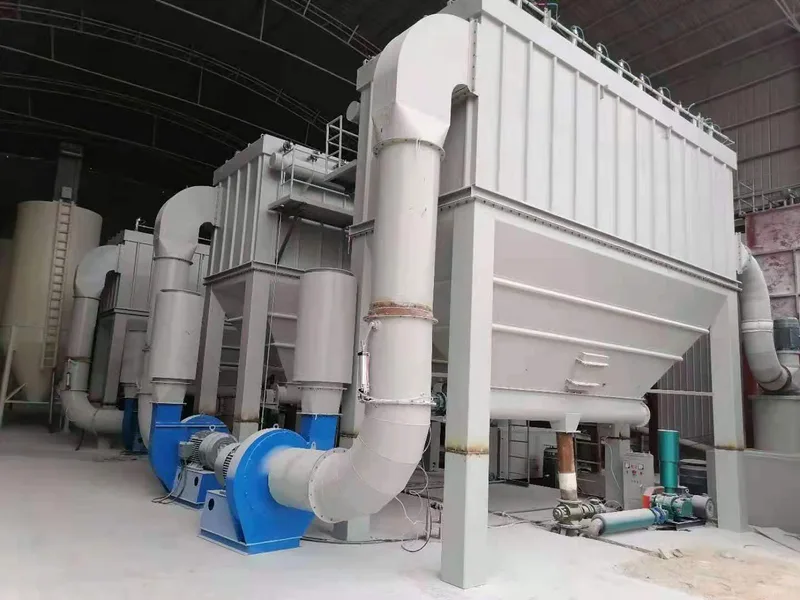
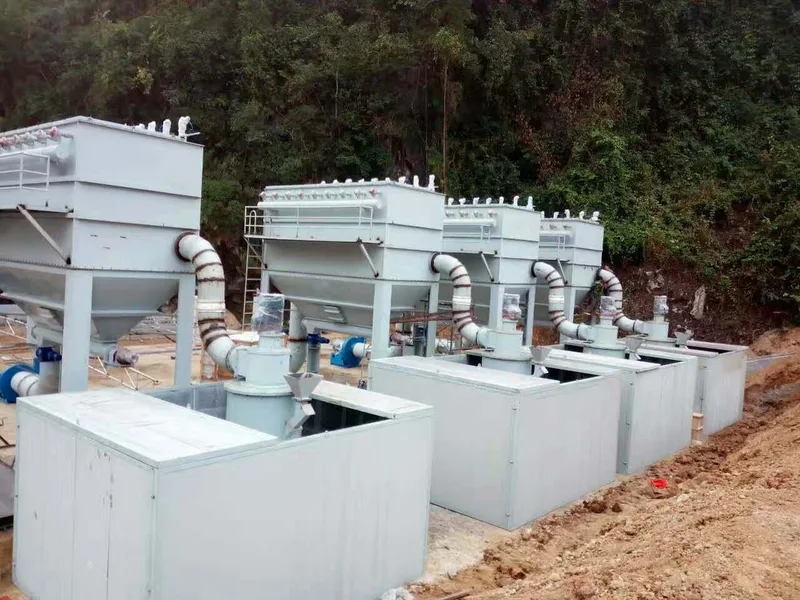
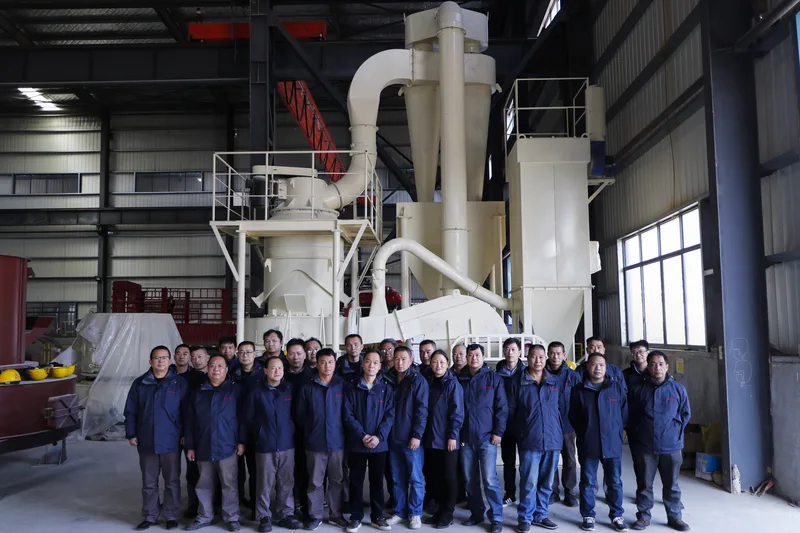
Calcium Carbonate Powder Production Line

Turn selected calcite, marble or limestone into controlled GCC powder with one engineered system: crushing, feeding, grinding, classification, dust collection and packing.

40-400 mesh
Economical Raymond range
300-3000 mesh
Ultrafine project range*
Since 1973
Parent manufacturing heritage

*Standard CRGM catalog ratings reach 200-2500 mesh; finer targets require material testing and classifier validation.

Explore the line

A production line designed around the powder, not just the mill

Ground calcium carbonate (GCC) performance depends on more than mesh. Feed mineralogy, whiteness, moisture, particle-size distribution, oil absorption, surface treatment and contamination control all affect the value of the finished powder.

Cronus configures the line backward from your target application. A 325-mesh filler plant and a D97 10 μm coating-grade plant need different grinding forces, classifiers, collectors and quality-control routines.

2core dry-grinding platforms
10 + 4catalog mill models
≤20-35 mmcatalog mill feed size
Closed loopgrinding and collection

What defines a valuable calcium carbonate powder?

Particle size is the starting point. Purity, color, morphology and surface chemistry determine whether the powder performs in the final product.

FormulaCaCO3
Molar mass100.0869 g/mol
Calcite densityabout 2.71 g/cm³
Mohs hardnessabout 3
Acid reactionReleases CO2

Critical quality indicators

Mineral purity

CaCO3 assay plus MgO, SiO2, Fe2O3 and acid-insoluble matter.

Optical performance

Whiteness, brightness and yellow index for paper, paint, plastics and artificial stone.

Particle control

D97, D50, top cut, residue and distribution width. Micron data is more reliable than mesh alone.

Processing behavior

Moisture, oil absorption, bulk density, flowability, pH and dispersibility.

Surface state

Untreated or coated powder, activation rate and compatibility with polymer or coating systems.

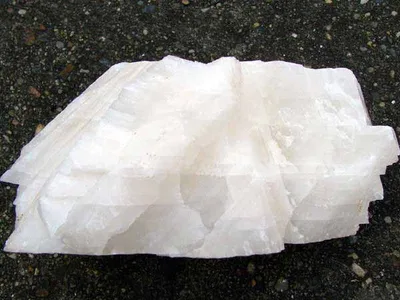
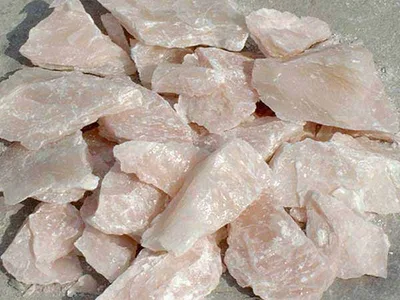
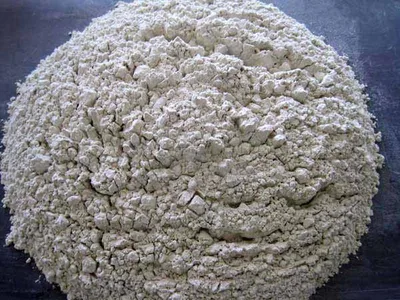
Clean white calcite raw material used for ground calcium carbonate
High-value GCC starts with consistent mineral selection. A representative bulk sample should be tested before equipment sizing.

Fineness-to-application guide

Indicative engineering guide. Final grade windows depend on local standards, formulation and measured PSD.

80 mesh ≈ 180 μm200 ≈ 75 μm325 ≈ 45 μm600 ≈ 25 μm1250 ≈ 10 μm2500 ≈ 5 μm
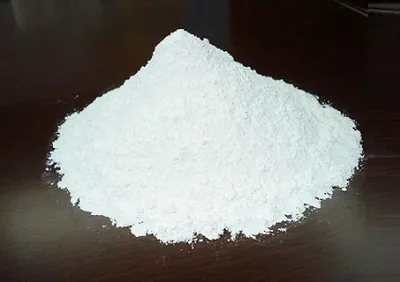
Fine calcium carbonate powder for plastics and masterbatch
80-325 mesh

Construction & dry mix

Putty, tile adhesive, mortar, artificial stone and general filler where throughput and cost control dominate.

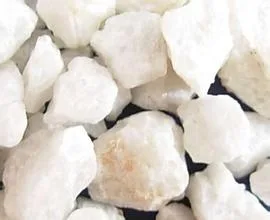
White carbonate mineral used in industrial filler production
325-800 mesh

Plastics & rubber

PVC pipe, profiles, cables, rubber goods and masterbatch; dispersion and moisture become increasingly important.

Light mineral sample representing fine powder applications
600-1250 mesh

Paint, coatings & paper

Controlled top cut, brightness and oil absorption support hiding, rheology, printability and cost optimization.

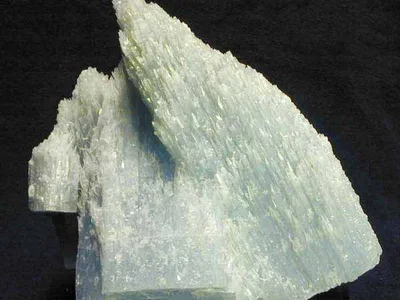
Fine white industrial mineral for specialty formulations
1250-3000 mesh

Specialty formulations

Sealants, inks, engineered polymers and premium coatings often require narrow PSD, surface treatment and strict contamination control.

Global resource and demand footprint

Calcium carbonate occurs widely as limestone, marble, chalk and calcite. Public statistics rarely isolate all GCC tonnage from broader limestone and stone categories, so a single defensible global consumption number is not available. Commercial supply is strongest where clean deposits, energy, logistics and filler demand coincide.

Asia-PacificChina, India, Vietnam and Southeast Asia: large construction, plastics, paper and coating demand.
Europe & TürkiyeEstablished high-whiteness carbonate, paper, polymer and specialty mineral networks.
North AmericaBroad limestone resources with mature paper, paint, plastics and construction markets.
MENA & AfricaEgypt, North Africa and Gulf-region deposits support growing local filler and building-material supply.

Eight controlled stages from rock to packed powder

Each stage protects the next. Stable feed chemistry and moisture reduce mill variation; accurate classification protects saleable top size; a sealed collection system protects both product and workplace.

  1. 01

    Ore selection

    Map mineralogy, remove visible waste and blend representative feed to stabilize CaCO3, whiteness and impurities.

  2. 02

    Crushing

    Jaw or hammer crushing reduces run-of-mine stone. Typical mill feed is controlled below 20-35 mm by model.

  3. 03

    Conditioning

    Screen, wash or dry when required. Moisture is normally held below the mill's material limit to prevent coating and unstable flow.

  4. 04

    Metered feeding

    A silo, feeder and elevator buffer upstream variation and keep the grinding zone consistently loaded.

  5. 05

    Grinding

    Choose CRRM for economical fine powder or CRGM multi-stage ring-roller grinding for ultrafine production.

  6. 06

    Classification

    Air classification separates qualified fines; coarse particles return to the mill until they meet the cut point.

  7. 07

    Collection & treatment

    Cyclones and pulse filters collect powder. Optional surface modification improves compatibility with polymers.

  8. 08

    QC & packing

    Verify PSD, moisture, whiteness and chemistry, then pack in valve bags, FIBCs or send to a bulk silo.

Engineering checkpoint: Provide a representative sample, target D97 or mesh, required t/h, moisture, feed size and end use. Cronus uses these six inputs to select the mill and classifier.

Which mill fits your calcium carbonate grade?

This screening tool gives a practical starting point. Final selection requires a material test because hardness, moisture, feed PSD and target top cut all change capacity.

Recommended starting platform

CRRM Raymond Mill

At 325 mesh, Raymond grinding normally gives the simplest flowsheet and lower initial investment. Confirm the model against your capacity and raw-material test.

Review CRRM specifications

Match grinding technology to the value of the final powder

Decision factorCRRM Raymond MillCRGM Ultrafine Ring Roller Mill
Best fitCommodity to mid-fine GCCHigh-value ultrafine GCC
Project finenessApprox. 40-400 mesh; catalog table 80-400/325300-3000 mesh project scope; catalog table 200-2500
Catalog capacity1-28 t/h across listed models0.2-12 t/h across listed models
InvestmentLower, simpler process and operationHigher, with precision classification and more auxiliaries
Particle controlGood for general fine-powder gradesBetter top-cut control and narrow ultrafine PSD
AutomationConventional or one-touch configured controlPLC/VFD-centered automatic operation
Trade-offNot the economical choice for very fine D97 targetsFeed consistency and wear management are more critical
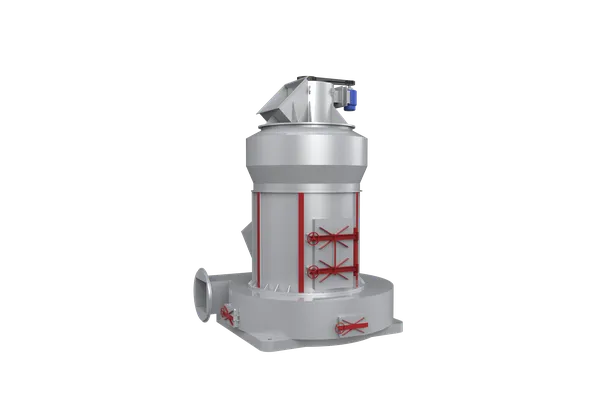
Cronus CRRM Raymond roller mill for calcium carbonate powder

Raymond Mill: economical fine-powder production

The CRRM is a vertical, air-swept roller mill. It combines grinding and classification in a compact circuit and is well suited to calcium carbonate grades where dependable output and investment efficiency matter more than an ultrafine top cut.

Catalog fineness
80-400 mesh by model
Catalog output
1-28 t/h on CaCO3 basis
Feed size
20-35 mm maximum by model
Size a Raymond line for my material

Working principle, in plain engineering terms

The gearbox turns a central shaft and suspended roller assembly. As the rollers orbit, friction also rotates them against the stationary grinding ring. Shovels lift feed into the roller-ring gap, where compression and shear reduce particle size.

Air enters below the ring and carries fine particles upward to the classifier. Qualified powder passes to the collector; coarse particles lose lift and return for another grinding cycle. The product leaves through the discharge system while filtered air recirculates or exhausts through dust control.

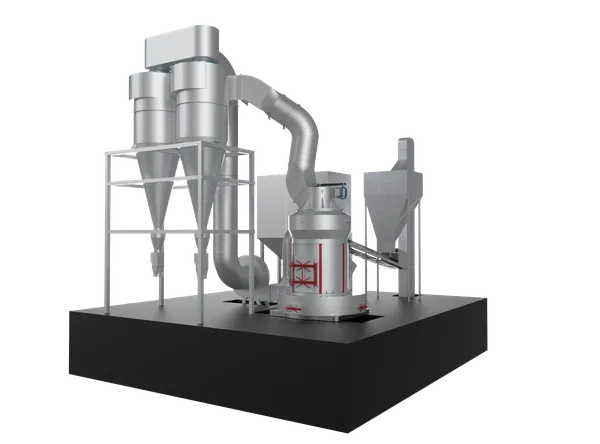
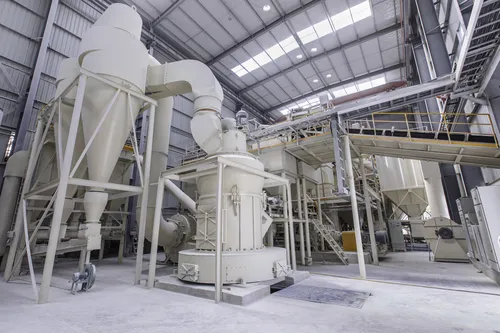
CRRM Raymond mill system showing grinding, air classification and collection equipment
Main components: feeder, grinding unit, roller and ring, classifier, blower, cyclone or collector, pulse filter and control system.
01

Integrated damping

Reduces transmitted vibration and supports stable operation.

02

Heavy-duty drive

Quake-resistant reducer architecture for continuous mineral duty.

03

Controlled airflow

Electric or pneumatic fan-valve options simplify adjustment.

04

Serviceable system

Integrated fan and accessible wear zone reduce maintenance complexity.

05

Optional smart control

One-touch operation and alerts can be configured for the line.

CRRM technical specifications

Official catalog values. Capacity is based on calcium carbonate at Mohs hardness 3 and varies with feed and product requirements.

ModelRollersMax feed (mm)Finished size (mesh)Capacity (t/h)Main unit (kW)Classifier (kW)Blower (kW)
4R322042080-4001-6451537
CRRM128032080-4002-10551555
CRRM130042080-4002-12902290
CRRM150032080-3252.5-1311022110
CRRM1620A43080-3253-1516030132
CRRM170043080-3254-1618537160
CRRM185043080-3254.5-2018537200
CRRM192043580-3255-2125045220
CRRM215043580-3256-2231545280
CRRM250043580-3258-2831545355
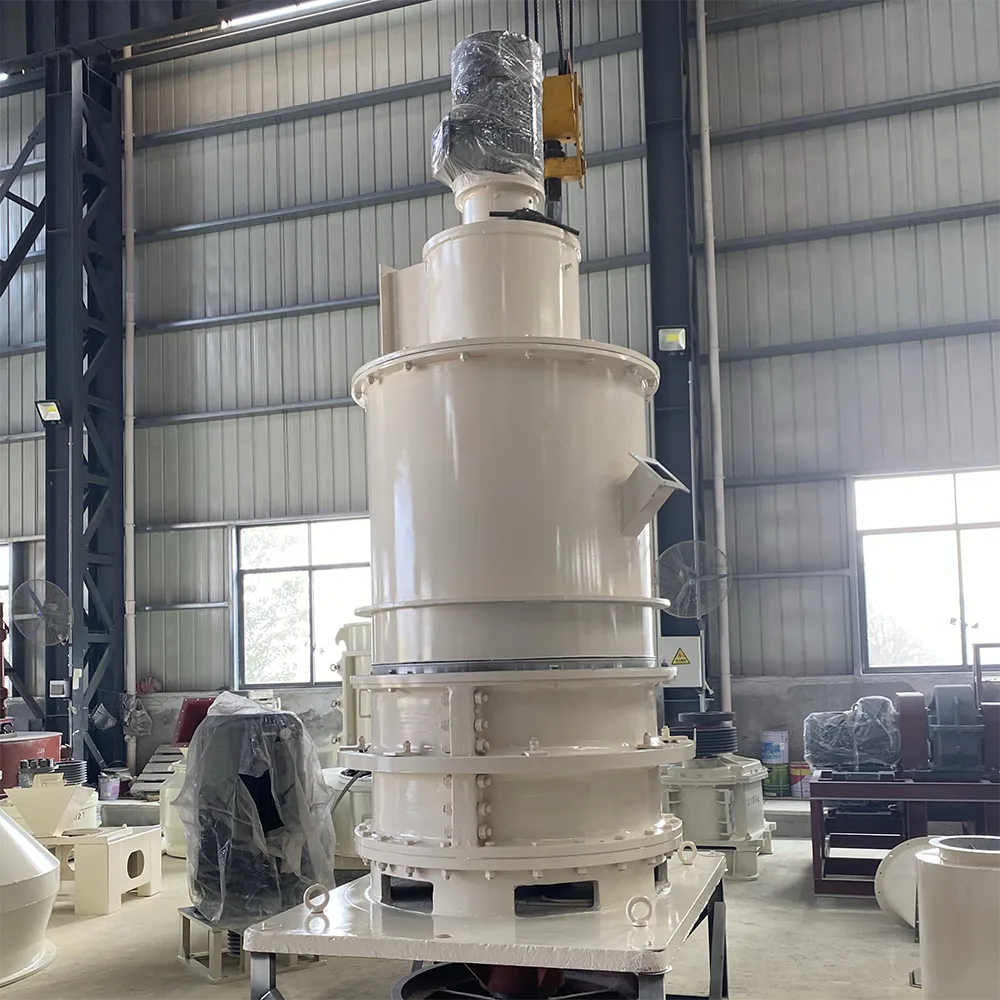
Cronus CRGM ultrafine ring roller mill for calcium carbonate powder

Ultrafine Ring Roller Mill: precise high-value powder

The CRGM uses several roller-ring grinding zones followed by a high-efficiency turbine classifier. It is designed for dry ultrafine processing of brittle minerals below Mohs hardness 6, including calcite, marble, dolomite, talc, barite and kaolin.

Catalog fineness
5-74 μm / 200-2500 mesh
Catalog output
0.2-12 t/h
Control
PLC + VFD-ready system
Validate an ultrafine target

Working principle and structure

The main motor drives stacked turntables. Multiple rollers travel along stationary grinding rings, and centrifugal distribution sends crushed feed through successive grinding zones. This repeated compression creates ultrafine particles without grinding media.

A high-pressure fan carries the powder to the vertical turbine classifier. Qualified fines leave through cyclone and bag collection; coarse particles return to the mill. The pulse filter cleans the final air stream, while PLC/VFD control coordinates feed, mill load, airflow and classifier speed.

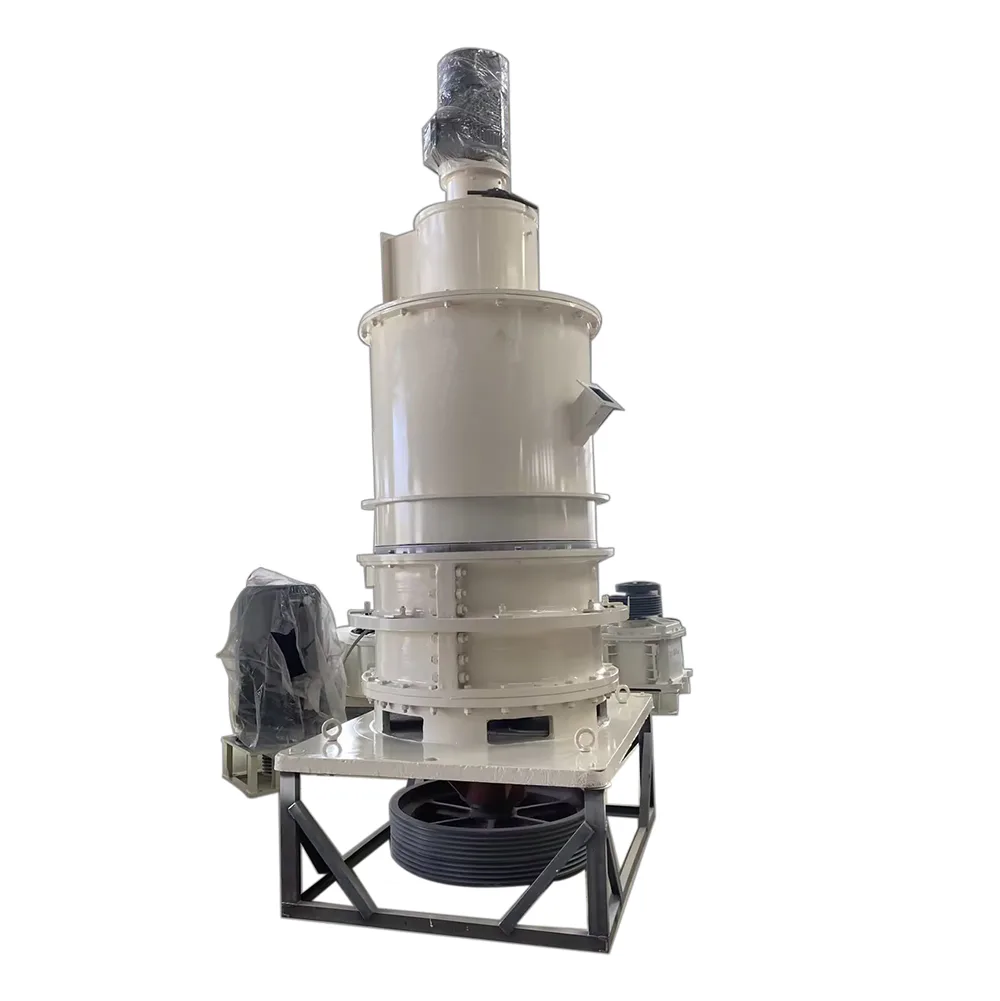
CRGM ultrafine ring roller mill structure with classifier and drive
Standard system: main unit, classifier, double cyclone, pulse bag filter, blower, motors, pipework and muffler; crushing, conveying and controls are configured to project needs.
01

Multi-stage grinding

Several roller-ring zones raise reduction efficiency in one compact unit.

02

Accurate classification

Vertical turbine classifier controls the cut point and limits coarse carryover.

03

VFD adjustment

Fast classifier and airflow tuning for different product grades.

04

Closed dust control

Cyclone and pulse-filter collection support clean automatic operation.

05

Wear-resistant parts

Special-material rollers and rings are designed for extended service.

CRONUS

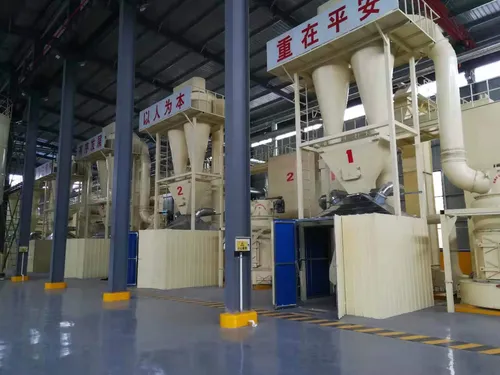
See the CRGM platform on site

The compact vertical arrangement keeps the grinding, classification and collection circuit close together. Project layout still depends on feed preparation, silo volume, packing method and local dust/noise requirements.

CRGM technical specifications

Official catalog values. CRGM60/80 list 5-74 μm; CRGM100/125 list 7-74 μm. Actual output varies with material and target D97.

ModelRing dia. (mm)Ring layersRollersMain speed (rpm)Feed (mm)Finished sizeCapacity (t/h)Total power (kW)
CRGM60600312250-280≤205-74 μm / 200-2500 mesh0.2-3101
CRGM80800321230-240≤205-74 μm / 200-2500 mesh0.5-4.5143
CRGM1001000428180-200≤207-74 μm / 200-2000 mesh1.8-5244
CRGM1251250432135-155≤207-74 μm / 200-2000 mesh1.5-12401

Materials and industries supported by the same platforms

Always confirm Mohs hardness, abrasiveness, moisture, combustibility and contamination limits before selection.

Calcite suitable for calcium carbonate grinding
Calcite & marbleGCC, paint, paper, plastics
Dolomite raw material for mineral grinding
DolomiteConstruction, glass, fillers
Bentonite mineral for fine powder processing
BentoniteDrilling, foundry, binders
Gypsum mineral for powder processing
GypsumBuilding products, additives
Talc mineral for ultrafine grinding
TalcPolymers, coatings, ceramics
White industrial mineral powder
Other brittle mineralsBarite, kaolin, feldspar and more

Grinding systems built for real production sites

Representative Cronus and parent-company installations. Detailed operating data is shared during technical review where customer confidentiality permits.

Yunnan calcium carbonate powder Raymond mill project
Calcium powder

Yunnan GCC production line

Integrated feeding, Raymond grinding, classification and collection for stable commercial powder production.

Nanyang calcium carbonate Raymond mill project
Coatings & plastics

Nanyang calcium carbonate line

Fine-powder system configured around product consistency and straightforward plant operation.

Hebei marble powder Raymond mill installation
Marble powder

Hebei mineral filler project

Raymond mill circuit for economical filler production from locally sourced marble.

Original wear parts from our own manufacturing network

Correct material, geometry and fit protect output, vibration and classifier performance. Cronus supplies matched parts backed by an in-house casting and machining network, quality inspection and direct pricing.

CRRM Raymond mill parts

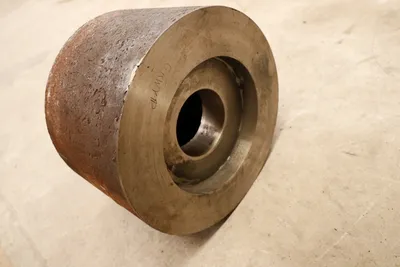
Original Raymond mill grinding roller
Grinding roller
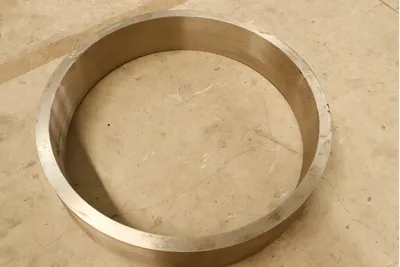
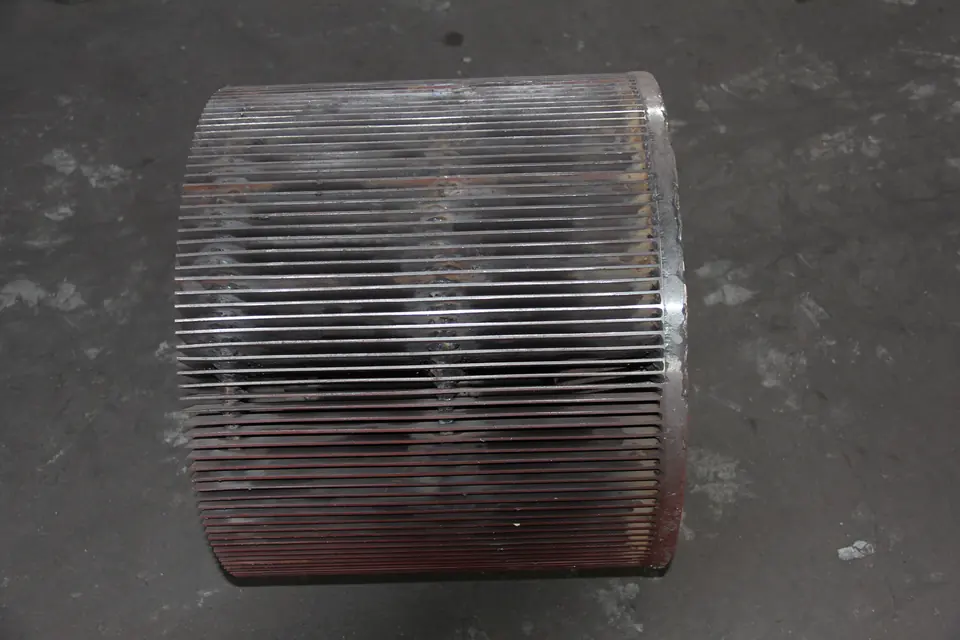
Original Raymond mill grinding ring
Grinding ring
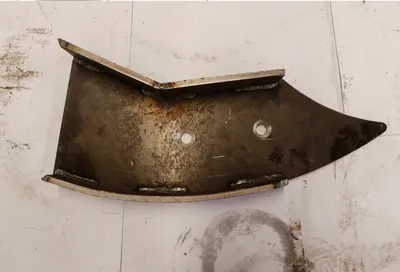
Original Raymond mill shovel blade
Shovel blade

Also available: roller assemblies, shafts, sleeves, bearings, classifier impellers, gears, seals and fan components.

CRGM ultrafine mill parts

Original CRGM ultrafine mill grinding ring
Grinding ring
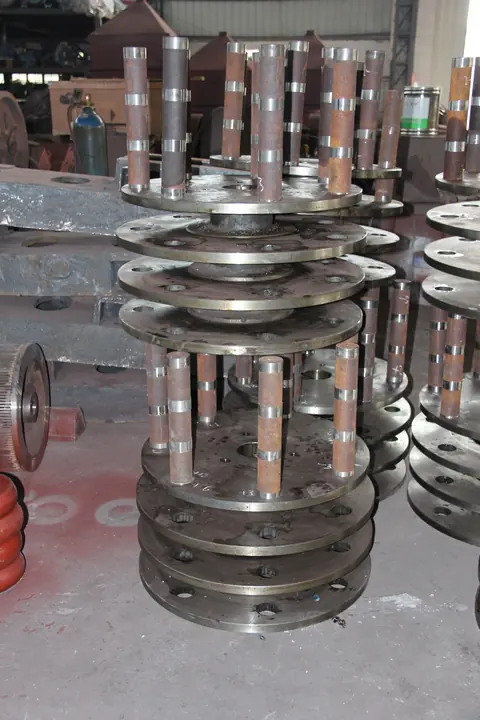
CRGM ultrafine mill roller assemblies
Roller assembly
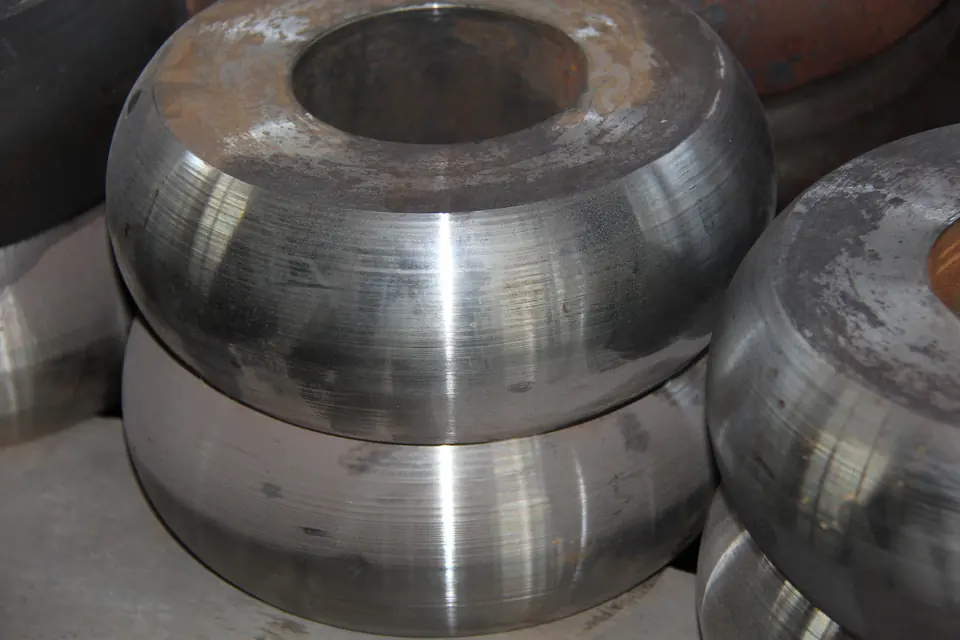
Wear-resistant CRGM ultrafine grinding roller
Wear roller

Also available: turntables, pins, classifier impellers, filter bags, discharge valves and seals.

OEM dimensional matchOwn casting resourcesMaterial traceabilityWear-life guidanceExport packing

Cronus connects global projects to over 50 years of mill-making experience

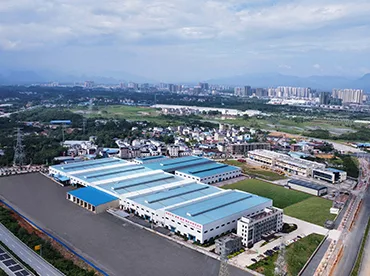
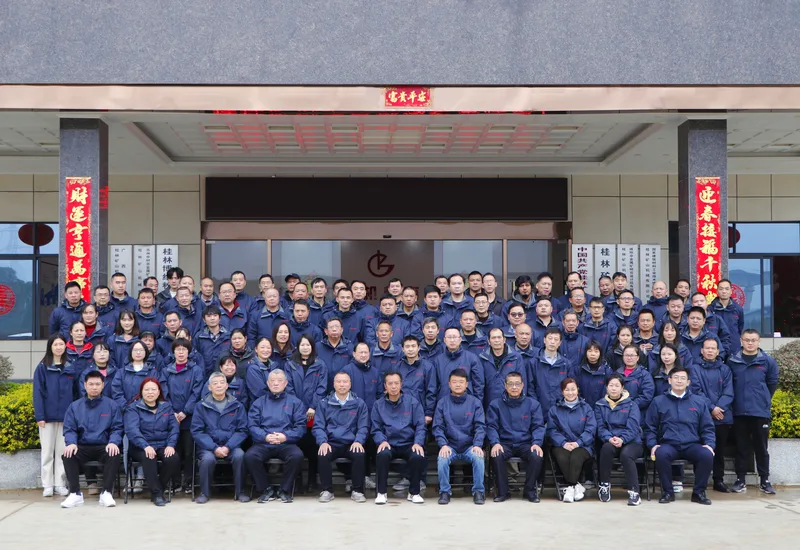
Shanghai Cronus Machinery Co., Ltd. is a wholly owned subsidiary of Guilin Mining Machinery Co., Ltd. (Guikuang). The parent company was founded in 1973 and has focused on powder-processing equipment for more than five decades.

From Shanghai, Cronus handles international application review, commercial coordination and service. Guilin's manufacturing base supports engineering, casting, machining, assembly, testing and parts supply.

Certificates, patents and recognized capability

The supplied company files document high-tech enterprise recognition, quality-management certification, invention or utility-model patents and manufacturing awards. Certification validity and product scope should always be confirmed against the sales contract and current certificate copy.

One accountable path through the project lifecycle

  1. 01

    Application review

    Material, target grade, capacity, utilities and site constraints.

  2. 02

    Grinding test

    Representative sample testing and PSD validation when required.

  3. 03

    Process design

    Flowsheet, equipment list, power load and layout interface.

  4. 04

    Manufacturing QA

    Fabrication, machining, assembly inspection and pre-shipment checks.

  5. 05

    Commissioning

    Installation guidance, parameter tuning and operator training.

  6. 06

    Lifetime support

    Remote diagnostics, maintenance planning and original parts supply.

Frequently asked questions

1. What calcium carbonate grades suit a Raymond mill?

CRRM is normally the economical choice for general GCC from about 80 to 400 mesh, including construction filler, putty, PVC and many coating or rubber grades. Confirm the required D97, not only mesh.

2. Can CRRM produce 40-mesh powder?

The broader Raymond application range can include coarse grades near 40 mesh with a suitable classifier and circuit. The current catalog table rates listed models mainly at 80-325 or 80-400 mesh, so coarse configuration should be confirmed during selection.

3. What capacity can I expect?

The current CRRM catalog lists 1-28 t/h across standard models on a calcium carbonate basis. Harder feed, finer product and higher moisture generally reduce output.

4. What feed size and moisture are required?

Maximum feed is 20-35 mm by model. The supplied product literature describes mineral feed below 6% moisture; lower, stable moisture usually improves flow and classification.

5. How does the classifier control fineness?

Air velocity and classifier speed determine which particles leave the circuit. Coarse particles fall back to the grinding zone, while qualified fines move to the collector.

6. Which parts wear fastest?

Grinding rollers, rings and shovel blades are the primary wear items. Life depends on abrasiveness, feed contamination, fineness, loading and operating hours.

7. Is a Raymond mill fully automatic?

The mill can be supplied with conventional controls or an integrated one-touch control and alarm package. The complete automation scope also depends on feeders, silos, packing and customer DCS requirements.

8. Raymond mill or ball mill for GCC?

Raymond grinding is generally more compact and simpler for dry fine-powder grades. Ball mills can suit high-volume or special closed-circuit duties, but require a different investment, classification and maintenance analysis.

9. How is dust controlled?

A sealed air circuit, cyclone or collector and pulse bag filter capture product and clean the final air stream. Local emission limits determine final filter design.

10. What information is needed for a firm quotation?

Send material name and sample, feed size, moisture, target D97 or mesh, required t/h, end use, voltage/frequency and site altitude.

Technical claims you can trace

Product specifications and company claims are taken from the Cronus Grinding Mill Catalog and certificates supplied in this project directory. General chemistry and regulatory context comes from the public references listed here. Application windows are Cronus engineering guidance, not universal product standards.

  1. PubChem: Calcium CarbonateFormula, molar mass and physicochemical references.
  2. IMA-Europe: Calcium CarbonateOccurrence, GCC/PCC context and industrial uses.
  3. USGS: Lime Statistics and InformationBroader limestone and lime mineral context.
  4. U.S. eCFR 21 §184.1191Food-use regulatory context; not a blanket certification of this line.
  5. ISO 3262-5Natural crystalline calcium carbonate extender terminology and requirements.

Send your powder target. Our engineers will return a process proposal.

For the fastest technical answer, include a material report or representative sample, target D97/mesh, capacity, feed size, moisture and end use.

Phone / WhatsApp+86 199 2122 1418 Emailsales@shcronus.com
Shanghai officeRoom 801, Building 2, Shanghai Zhicheng, No. 8666 Hunan Road, Pudong New Area, Shanghai, China

Certificate preview